Business Development Beyond the Founder: How Professional Services Firms Build Transferable Growth
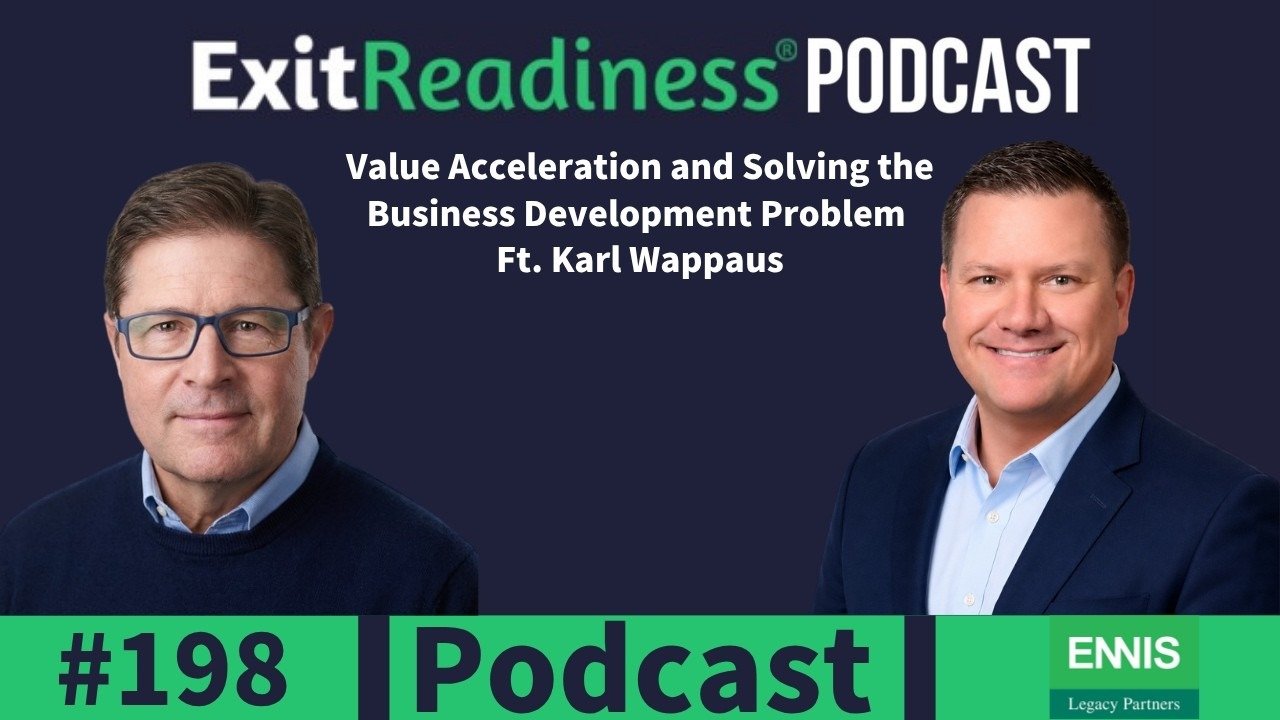
If most new business still comes through the owner's relationships, what is a buyer really acquiring? Karl Wappaus explains how professional services firms can move business development beyond the founder through referrals and centers of influence.

Get Rid of Your Crap: Clean Up Your Business Data Before a Sale
Digital clutter slows your team down, raises costs and risk, and weakens your AI results. When a buyer starts due diligence, it can shake their confidence. Dale Tuttle of FutureBridge explains how to clean it up, and why human judgment still matters.

Operational Due Diligence: What Buyers Look for in How Your Business Runs
Buyers want to know how well your business actually runs, not just what it earns. Tim Van Mieghem of The ProAction Group explains operational due diligence, the risks buyers look for, and how to uncover hidden capacity long before you sell.

AI Workflow Automations for Professional Services Businesses: Where to Start and What to Avoid
AI's biggest payoff isn't helping one person work faster. It's improving how work moves through your firm. Scott Samborn of Aspen Management Group explains where to start, the mistakes to avoid, and why buyers value firms built on repeatable systems.

Why AI Won't Fix Your Company: What Owners Should Get Right Before Investing in AI
AI doesn't fix weak leadership, unclear strategy, or broken processes. It amplifies them. Leadership expert Jürgen Dauk explains what owners should get right first, and why buyers care more about your people and fundamentals than your AI tools.

Recruiting, Retaining, and Engaging Generation Z Workers: How to Keep Younger Employees
Recruiting is harder, turnover costs more, and Gen Z expects something different from work. Danielle Verderosa of HR Allies shares practical ways to attract and keep younger employees, starting with the first hour of their first day.

Risk Management: Identifying and Insuring Key Employees to Protect Business Value
Losing one key employee can disrupt revenue, customer relationships, and the value of your business. Mark Gage of Northeast Brokerage explains how to identify your key people, how key person insurance works, and how to reduce the risk.

Selling in Stealth Mode: How to Market Your Business Without Alerting Customers, Vendors, or Employees
Once word gets out that a business is for sale, employees, customers, and vendors start to worry, and value can erode before a deal closes. Greg Kovsky of IBA explains how to keep a sale confidential and when to tell the people who matter.

Three Actions to Become Less Central to Your Business: How to Reduce Owner Dependency
If you stepped away for 90 days, would your business keep running? Laurie Barkman, founder of The Business Transition Sherpa®, shares three practical actions owners can take now to reduce owner dependency and build a more transferable business.

How AI Impacts What Your Business Is Worth: From Operations to Exit
Not every use of AI adds value. Janet Waring of ArtForm Agency explains how to move from scattered AI experiments to operational use, why capturing tribal knowledge matters, and what that means for the value buyers see in your business.

The Benefits of an ESOP in a Family Business Transfer: Succession When There's No Clear Heir
When some family members want to stay in the business and others don't, or there's no heir ready to take over, an ESOP can bring clarity. ESOP expert Kelly Finnell explains when it fits, how it works, the tax benefits, and what it costs.

A Tax-Smart Exit: How to Reduce Taxes When You Sell Your Business
Without planning, taxes and fees can take 40% or more of a business sale. Tax attorney Ed Cotney explains why tax planning has to start years before you sell, and the practical steps that can help you keep more of what you've built.

An ESOP Exit: Lessons from an Owner Who Sold His Company to His Employees
ESOPs are often discussed in theory. Tim Rettig lived it, transitioning his IT company to employee ownership in two stages. He shares what made the company a strong candidate, how he prepared his team, and what life after the exit looks like.